
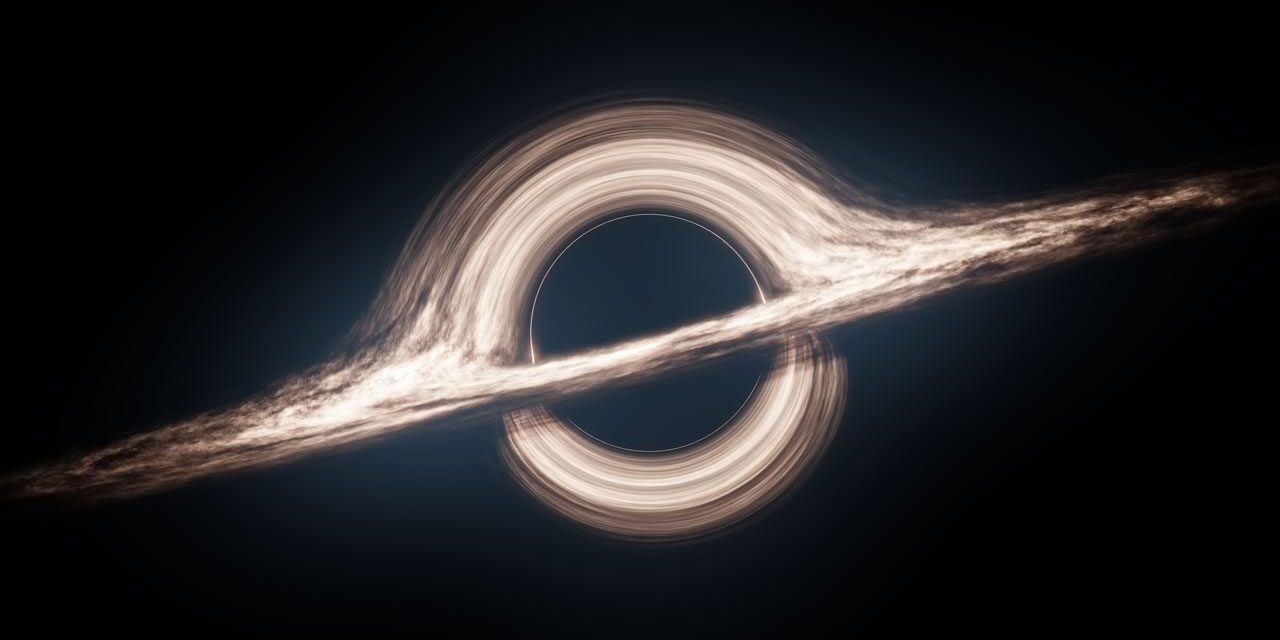
Growing up, after a science class, I was scared of Black Hole and tried to made a calculation how much time we had before it sucked us all in its never ending dark cave. I was scared of Barmuda Triangle too, which is non existance. But it’s true that black holes are one of the most terrifying, awe-inspiring, and downright bizarre objects in the entire universe. For decades, they existed only as mathematical curiosities – equations that predicted something so dense that not even light could escape. Today, we have actual photographs of them. But the more we learn, the stranger they get. Here are five facts that will make your brain hurt in the best possible way.
1. Time Slows Down Near a Black Hole
This is not science fiction or magic like Marvel or DC movies – it is Einstein’s theory of general relativity in action. The closer you get to a black hole, the slower time moves relative to someone far away. If you hovered near the event horizon for what felt like one hour to you, years could pass for someone orbiting Earth. This phenomenon is called gravitational time dilation, and it has been confirmed experimentally right here on our planet – clocks at higher altitudes run ever so slightly faster than clocks at sea level.
💡 Interstellar (2014) depicted this effect almost perfectly when astronauts returned from a planet near a black hole to find their colleague had aged by 23 years.
2. The Singularity Breaks Physics
At the very center of a black hole lies the singularity, a point of infinite density where our current laws of physics simply stop working. General relativity and quantum mechanics, the two most successful theories ever devised, flat-out contradict each other at the singularity. Scientists believe that a future ‘theory of everything’, perhaps string theory or loop quantum gravity, will one day explain what truly happens there. Until then, the center of a black hole remains one of the great unsolved mysteries of science.
3. Black Holes Are Not Vacuum Cleaners
Contrary to popular belief, a black hole does not suck everything in like a cosmic vacuum. If our Sun were magically replaced by a black hole of equal mass (please do not try this), the Earth would continue to orbit it exactly as it does today. It is only when matter gets close enough, within the event horizon, that escape becomes impossible. The key is proximity, not some mystical attractive force beyond normal gravity.
4. They Slowly Evaporate
In 1974, Physicist Stephen Hawking theorized that black holes are not truly black. Through a quantum process now called Hawking Radiation, black holes slowly emit energy and shrink over immense timescales. A stellar-mass black hole would take longer than the current age of the universe to evaporate completely. The universe itself would be barely recognizable by that point. This discovery has deep implications for what happens to the information of everything that falls in a puzzle known as the Black Hole Information Paradox.
5. We Have Actually Photographed One
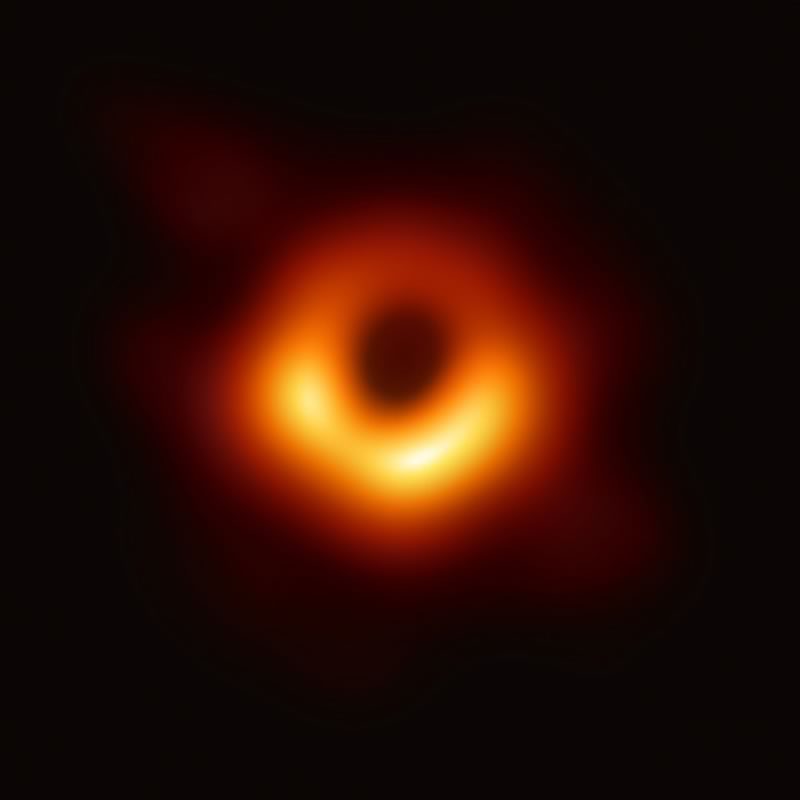
Image Source: First-ever direct photograph of a Black hole, captured by the Event Horizon Telescope (Creative Common)
In April 2019, the Event Horizon Telescope collaboration released the first-ever image of a black hole, the supermassive beast at the center of galaxy M87, some 55 million light-years away. In 2022, they released an image of Sagittarius A*, the black hole at the center of our own Milky Way galaxy. These images required a planet-spanning array of radio telescopes working in perfect synchrony, effectively creating an Earth-sized telescope. The fuzzy orange rings you saw in the news? That is the glowing gas being superheated as it spirals toward the event horizon.
🌌 The black hole at the center of M87 is 6.5 billion times the mass of our Sun. Our entire solar system would fit inside it with room to spare.
Black holes remind us that the universe operates by rules far stranger than everyday intuition. Every answer they provide raises a dozen more questions and that is precisely what makes science so endlessly thrilling.
Image Credit:
Featured Image: Image Source (Creative Commons)