November 2025 was an exciting month alive with scientific progress, from the glaciers of Antarctica to the corridors of the FDA, from personalized genetic medicine to groundbreaking fusion plasma records. Here is your curated roundup of the most important breakthroughs, discoveries, and developments that shaped the month.
🧬 1. FDA Opens New Pathway for Personalized CRISPR Therapies
In a landmark regulatory move, the U.S. Food and Drug Administration (FDA) launched a brand-new approval pathway specifically designed for personalized gene therapies. The announcement came in the wake of the remarkable story of baby KJ Muldoon, who earlier in 2025 became the world’s first person to receive a customized gene therapy for a potentially fatal metabolic disorder—one that threatened to flood his brain with toxic levels of ammonia. After the treatment, KJ took his first steps. Inspired by this success, the team behind the procedure announced plans to treat more children starting in 2026, and the FDA’s new pathway is designed to facilitate exactly that kind of rapid, bespoke genetic medicine. The Chan Zuckerberg Initiative simultaneously announced the creation of the Center for Pediatric CRISPR Cures, a California-based hub led by UC Berkeley and UC San Francisco researchers.
🔗 Source: Knowable Magazine – 2025 Year in Science
🧊 2. Antarctica’s Hektoria Glacier Undergoes Fastest-Ever Retreat
On November 3rd, scientists reported that the Hektoria Glacier in Antarctica had undergone the fastest retreat of any glacier in recorded scientific history. This alarming finding underscores the accelerating pace of climate change and its consequences for global sea levels. The glacier, located on the Antarctic Peninsula, is particularly sensitive to warming ocean waters. Researchers noted that the speed of the retreat far exceeded previous models, raising urgent questions about the timeline for future ice loss. This discovery came just weeks before world leaders gathered in Belém, Brazil for the UN Climate Conference COP30, where global carbon emissions—still rising year-on-year—dominated debate. You can read a very information article at earth.com – Fastest glacier collapse in history was recently recorded in Antarctica.
🔗 Source: Wikipedia – 2025 in Science
🐷 3. Pig Kidney Transplant: Breakthrough in Xenotransplantation
A November study conducted using a brain-dead patient (whose body had been donated to science) achieved a double milestone in the field of xenotransplantation—the transplantation of organs across species. Researchers at NYU successfully prevented rejection of a gene-edited pig kidney on two separate occasions, administering medicine to restore the organ’s function each time. The experiment ran for 61 days before being deliberately concluded. With over 90,000 Americans on the waiting list for a kidney transplant, and 13 patients dying daily without receiving one, the pig-to-human transplant program has become one of the most pressing frontiers in modern medicine. January 2025 had already seen the fourth gene-edited pig kidney transplanted into a living human patient.
🔗 Source: Smithsonian Magazine – Top 10 Science Stories of 2025
⚛️ 4. WEST Tokamak Sets New World Record for Plasma Duration
French scientists operating the WEST (Western Superconducting Tokamak Experiment) nuclear fusion reactor achieved a stunning milestone: sustaining plasma for 1,337 seconds—over 22 minutes—setting a new world record that surpassed the previous benchmark by 25%. Plasma containment is one of the central engineering challenges in achieving viable nuclear fusion, which promises near-limitless clean energy. This milestone marks a major step forward in the global race to replicate the energy-generating process of the Sun. The achievement is particularly significant as fusion energy research accelerates worldwide, drawing enormous investment from both governments and private companies.
🔗 Source: Wikipedia – 2025 in Science
🔭 5. Argonne’s Aurora Supercomputer Powers New Frontiers
November 2025 saw a major update on the Aurora exascale supercomputer at Argonne National Laboratory—one of the most powerful computers ever built. Aurora’s unprecedented processing power is being applied to breakthroughs across medicine, aerospace, and materials science. Simultaneously, Argonne’s upgraded Advanced Photon Source (APS) set a world record for electron beam emittance, making it the brightest synchrotron X-ray light source on Earth. With beams up to 500 times brighter than its predecessor, the APS enables scientists to study biological structures and energy materials with extraordinary precision. Argonne also unveiled Polybot, an AI-driven automated laboratory using robotics and machine learning to discover new high-performance materials faster than any human team could.
🔗 Source: Argonne National Laboratory – Top Breakthroughs of 2025
🌍 6. Measles Elimination Status Lost in the Americas
On November 10, Canada was officially stripped of its measles-free designation by the Pan American Health Organization—and as a direct result, the entire Americas region lost its measles elimination status, a benchmark it had held since 2000. This public health setback reflects alarming trends in declining vaccination coverage, partly driven by the US withdrawal from the World Health Organization (WHO) early in 2025 and the rollback of foreign vaccine aid programs. As of late November, measles cases were surging across several countries, with experts warning the US itself could face a similar designation loss if outbreaks are not contained. Public health officials were unanimous in calling for urgent restoration of vaccination programs.
🔗 Source: Smithsonian Magazine – Science Stories 2025
🌱 7. Renewable Energy Surpasses Coal Globally
November marked another banner milestone in the global energy transition: renewable energy officially surpassed coal as a source of electricity worldwide. Solar and wind energy grew fast enough to cover the entire increase in global electricity demand from January to June 2025, according to energy think tank Ember. This was driven in large part by China’s extraordinary industrial output of solar panels—now produced at staggering scale, far cheaper than anywhere else on Earth—and its deployment of wind turbines reaching 300 meters in height. In September, Chinese President Xi Jinping had declared at the United Nations that China would cut carbon emissions by up to 10% over the next decade purely by scaling renewables, not by reducing energy use.
🔗 Source: Science AAAS – Breakthrough of the Year 2025
🌍 In Memoriam: Jane Goodall (1934–2025)
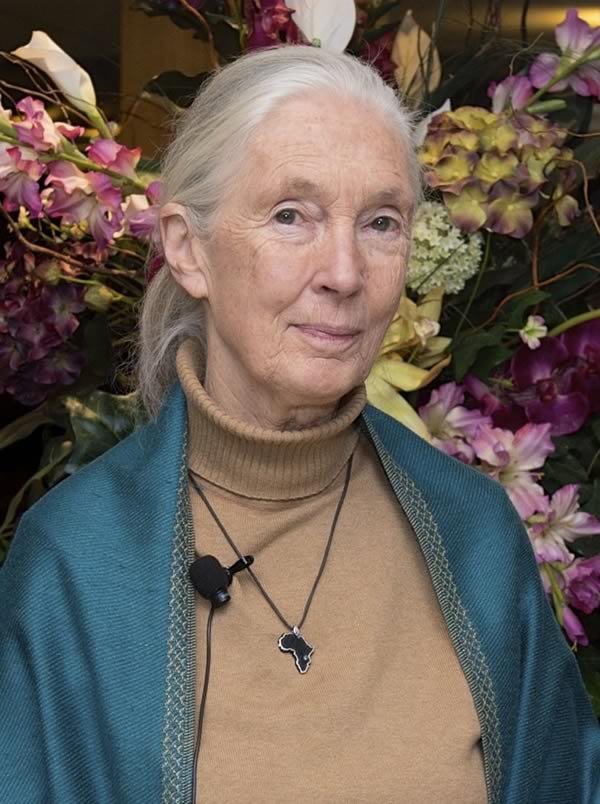
Photo cBy U.S. Department of State from United States – Deputy Secretary Higginbottom Poses for a Photo With Dr. Jane Goodall and the State Department’s Global Health Diplomacy Director Jordan in Washington, Public Domain, Link
The world of science mourned the loss of Jane Goodall, the legendary British primatologist and conservationist, who passed away on October 1, 2025, at the age of 91. Goodall’s six decades of groundbreaking fieldwork among chimpanzees in the Gombe Stream National Park of Tanzania transformed our understanding of animal behavior. She was among the first researchers to document chimpanzees making and using tools—a discovery that shook the scientific community’s understanding of what it means to be human. She also documented distinct personalities among the chimps she studied. Goodall was not only a scientist but a tireless environmental activist and UN Messenger of Peace, whose legacy will endure for generations.
🔗 Source: CBS News – Notable Deaths in 2025